Byzantine Empire
Archon — Establishing Christianity
 Play documentary
 Hover to magnify · click to open
 Detail · tap
 View · tap
 View · tap
 View · tap
 View · tap
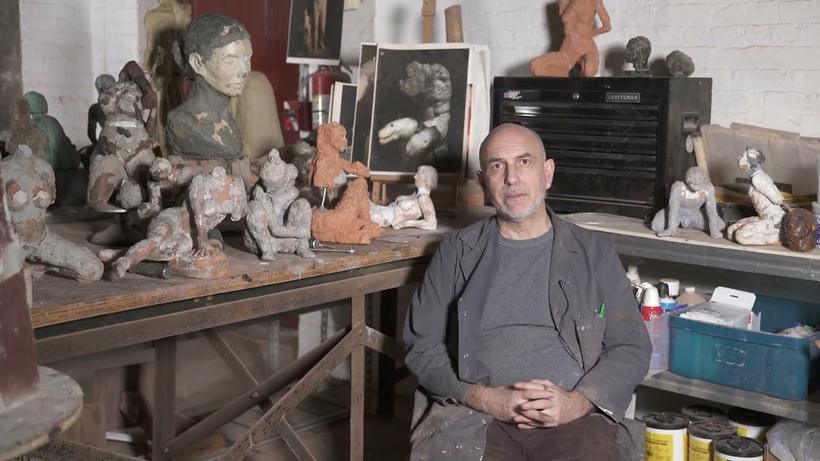
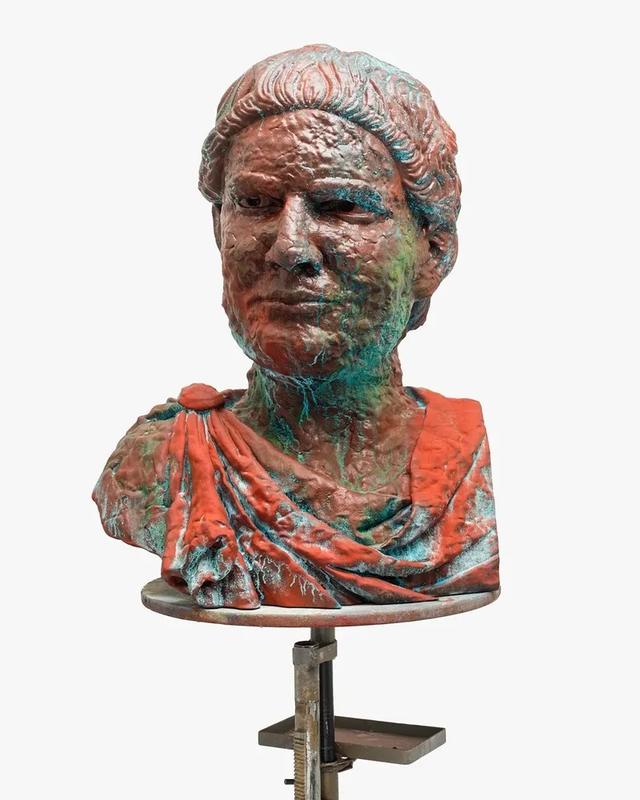
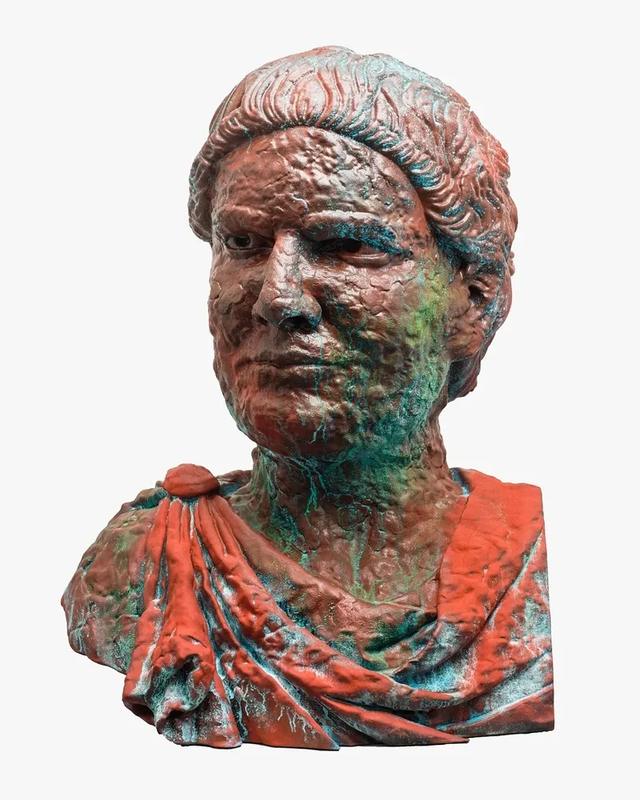
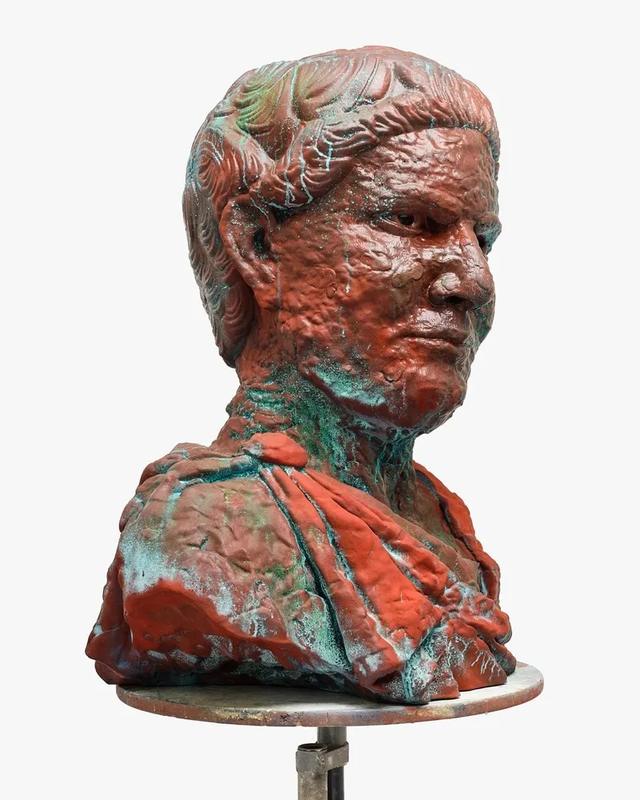
"Archon is inspired by my father, a sea captain— a figure of leadership, clear vision, decision-making. As described above, his childhood was marked by scarcity and threat, and his adult conviction that survival depends on keeping one’s eyes open and prioritizing his family’s safety. These values were passed on to me, with little tolerance for self-indulgence: there were high expectations in every respect.
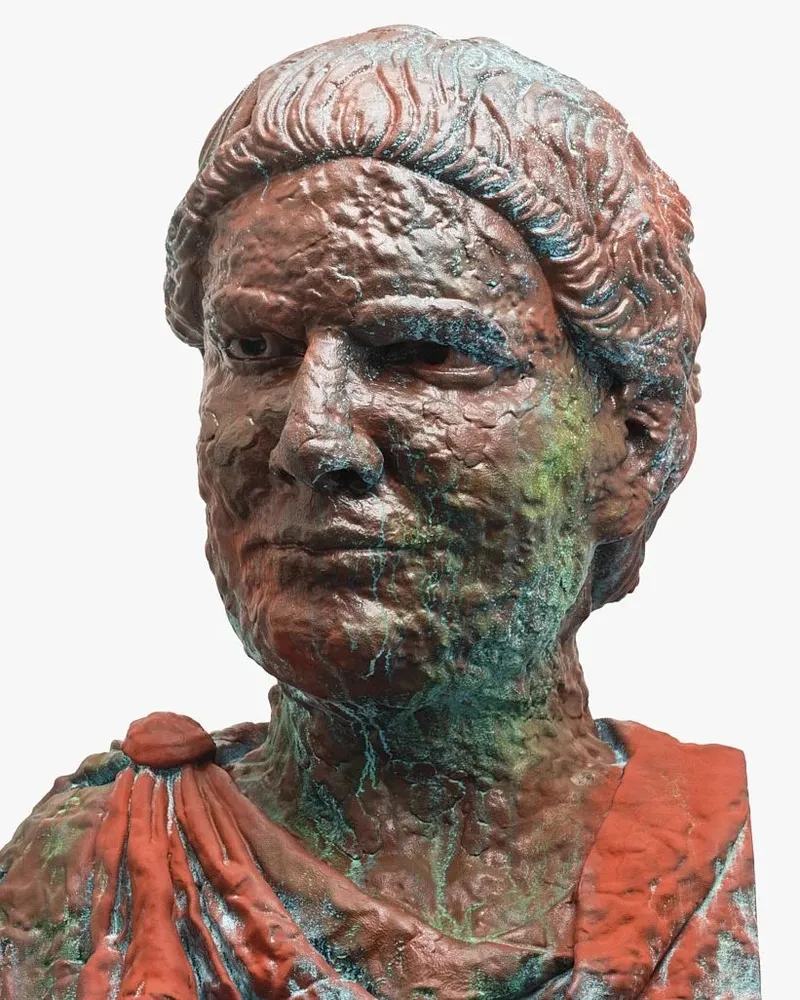
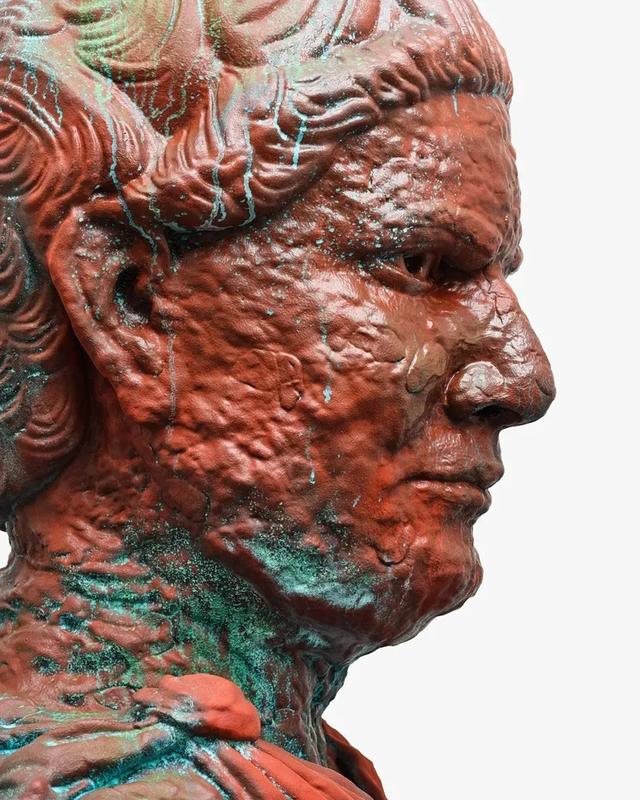
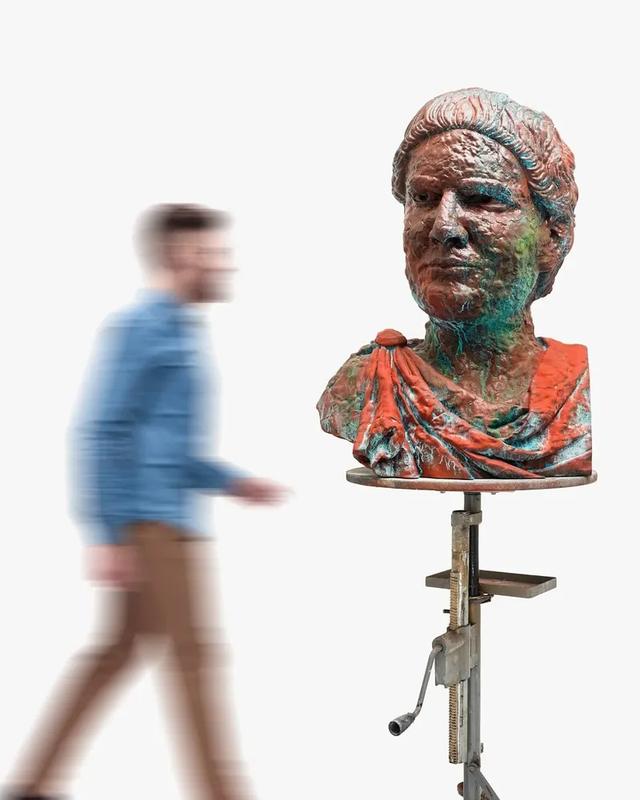
As to the sculpture: the word 'archon' means 'ruler' or 'leader,' and the sculpture reflects that: a heavy brow and concentrated gaze, occasionally austere. Archon shows another way trauma travels.
Archon, like Thalia, has spawned variations that have found their way to many cities around the world. The largest one is the monumental Constantine Regarding the Cross, in Southampton, NY."
Byzantine Empire · 330–1453
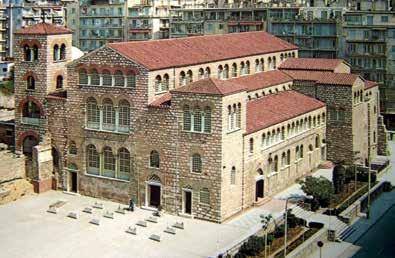
church dating to the 4th c.
Byzantine
Empire
The Byzantine Empire lasted for over 1,100 years from to 1453. The Byzantine Empire was the continu ation of the Roman Empire in its Eastern regions af ter the fall of that empire. The moment of its greatest extent and strength was in the early days. However, it survived in some form until the fall of the capital city, Constantinople, current ly called Istanbul, to the Ottoman Empire in 1453. Though its citizens referred to themselves as Romans, it was heavily in fluenced by Greek culture and Greek, rather than Latin, was the official language.
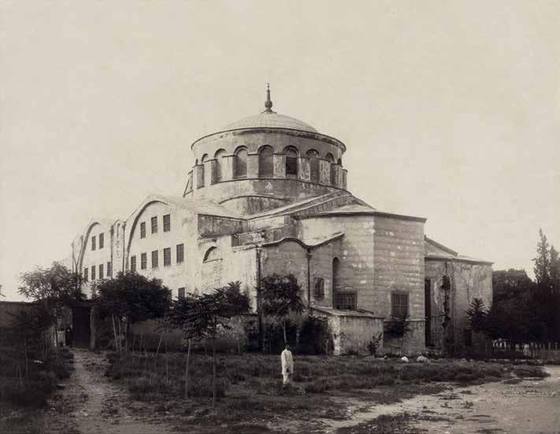
The land on which modern Greece stands was an essential component of the Byzantine Empire: “Greece remained part of
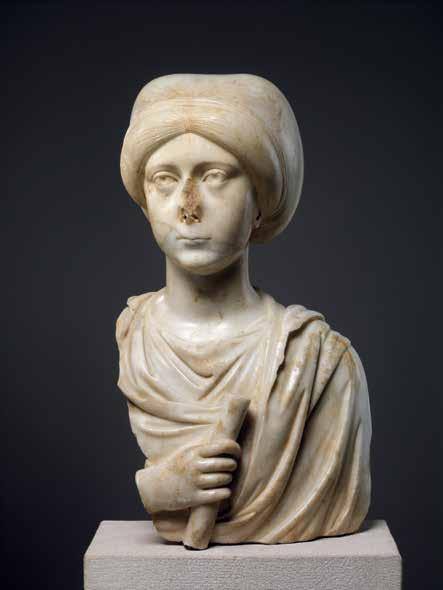
Terracotta oil lamp, 4th–5th c. the relatively unified eastern half of the empire. Contrary to outdated visions of late antiquity, the Greek peninsula was most likely one of the most prosperous regions of the Roman and later the Eastern Roman/Byzantine Empire. Older scenarios of poverty, depopulation, barbarian destruction and civil decay have been revised in light of recent archaeological discoveries… This view of extreme prosperity is widely accepted today, and it is assumed between the 4th and 7th centuries, Greece may have been one of the most economically active regions in the eastern Mediterranean. Following the loss of Alexandria and Antioch to the Arabs, Thessaloniki became the Byzantine Empire’s second largest city, called the co-regent, second only to Con stantinople.”1 Art of the Byzantine era is markedly different from that of ancient Greece: “Surviving Byzantine art is mostly religious and with exceptions at certain periods is highly conventionalised, following traditional models that translate carefully controlled church theology into artistic terms. Painting in fresco, illumi nated manuscripts and on wood panel and, especially in earlier periods, mosaic were the main media, and figurative sculpture very rare except for small carved ivories. Manuscript painting preserved to the end some of the classical realist tradition that was missing in larger works. Byzantine art was highly presti gious and sought-after in Western Europe, where it maintained a continuous influence on medieval art until near the end of the period. This was especially so in Italy, where Byzantine styles persisted in modified form through the 12th century, and be came formative influences on Italian Renaissance art. But few incoming influences affected the Byzantine style. With the ex pansion of the Eastern Orthodox church, Byzantine forms and styles spread throughout the Orthodox world and beyond. “Influences from Byzantine architecture, particularly in reli gious buildings, can be found in diverse regions from Egypt and Arabia to Russia and Romania. Byzantine architecture is known for the use of domes, and pendentive architecture was invented in the Byzantine Empire. It also often featured marble columns, coffered ceilings and sumptuous decoration, including the ex tensive use of mosaics with golden backgrounds. The building material used by Byzantine architects was no longer marble, which was very appreciated by the Ancient Greeks. They used mostly stone and brick, and also thin alabaster sheets for win dows.”2 The reign of Constantine the Great marks the beginning of the Byzantine Empire and a major turning point in the history of the empire.
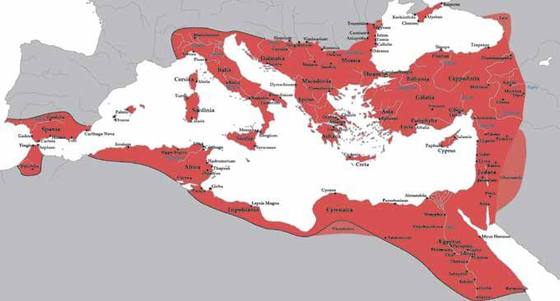
From Wikipedia: “Upon his ascension to emperor, Constan tine enacted numerous reforms to strengthen the empire. He restructured the government, separating civil and military au thorities. To combat inflation, he introduced the solidus, a new gold coin that became the standard for Byzantine and European currencies for more than a thousand years. The Roman army was reorganized to consist of mobile units (comitatenses) and garrison troops (limitanei), which were capable of countering internal threats and barbarian invasions. Constantine pursued successful campaigns against the tribes on the Roman fron tiers—such as the Franks, the Alamanni, the Goths and the Sarmatians—and resettled territories abandoned by his predecessors during the Crisis of the Third Century with citizens of Roman culture.”3
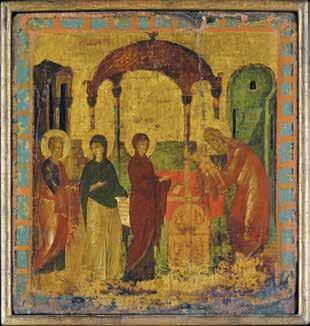
Though he remains a controversial figure, Constantine has often been lauded for these achievements, both before and after his death: “During Constantine’s lifetime, Praxagoras of Athens and Libanius, pagan authors, showered Constantine with praise, presenting him as a paragon of virtue…During the Mid dle Ages, European and Near-East Byzantine writers presented Constantine as an ideal ruler, the standard against which any king or emperor could be measured.”4 Perhaps his most lasting legacy is that Constantine legal ized Christianity and removed the penalties under which many Christians had been previously martyred. “According to Christian writers, Constantine was over 40 when he finally declared him self a Christian, making it clear that he owed his successes to the protection of the Christian High God alone. Despite these declarations of being a Christian, he waited to be baptized on his deathbed, believing that the baptism would release him of any sins he committed in the course of carrying out his poli cies while emperor. He supported the Church financially, built basilicas, granted privileges to clergy (such as exemption from certain taxes), promoted Christians to high office, and returned property confiscated during the long period of persecution. His most famous building projects include the Church of the Holy Sepulchre and Old St. Peter’s Basilica. In constructing the Old St. Peter’s Basilica, Constantine went to great lengths to erect the basilica on top of St. Peter’s resting place, so much so that it even affected the design of the basilica, including the challenge of erecting it on the hill where St. Peter rested, making its complete construction time over 30 years from the date Constan tine ordered it to be built.”5 Christianity was preached on the Greek peninsula in the first century (by Saint Paul and others), but it was not until the era of Constantine that Christianity spread rapidly throughout what is now modern-day Greece. Under Constantine, Christianity evolved from being a fringe sect to being the central religion of the empire, and Eastern Orthodoxy is still by far the domi nant religion of Greece. Up to 90% of Greek citizens identify as Christian, and the church is a major force in the cultural land scape, seen in traditions like holidays and name days. Salaries of Orthodox clergy are paid for by the state.
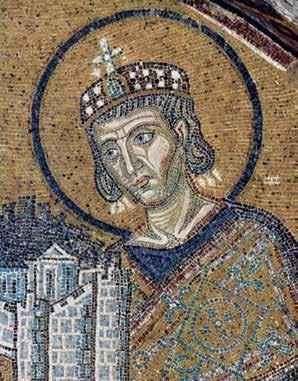
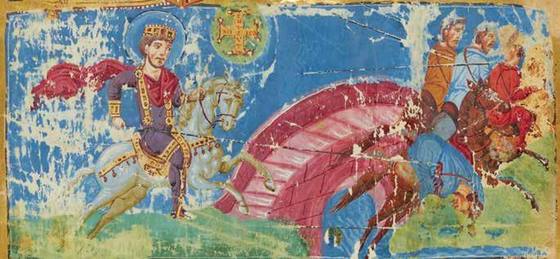
Though contemporary historians debate how Constantine individually felt about Christianity over the course of his life, the medieval Christian church held him up as an example of extreme virtue, and even today, the Eastern Orthodox Church considers Constantine a saint and an equal of the apostles.
Sculptural
Precedent
For the Byzantine Empire, I found two heads, colossal heads of Constantine. The first of the heads is from the Colossus of Constantine, the surviving fragments of which are now housed by the Capitoline Museums in Rome. The remaining pieces were carved from white marble, while the rest of the body was made of brick and wood and possibly gilded, which was subsequently pillaged. According to Michael Grant: “Here was the man at whose court...writers felt it appropriate to speak of the ‘Divine Face’ and ‘Sacred Countenance’. The sculptor has conceived this countenance as a holy mask, an over powering cult object resembling, though on a far greater scale, the icons of future Byzantium: an idol animated with the divine presence, and with the power to repel the demons lurking in pagan images.”6 The fragments include two different right hands, and according to Wikipedia, it is thought “that the statue was re-worked at some time late in Constantine’s reign and a hand holding a sceptre was replaced by a hand holding a Christian symbol.”7 The 8-foot tall head was perhaps meant to convey the other-worldly nature of the Emperor, notable in its enormous eyes which gaze toward eternity from the more typically ren dered stiff face.
Another, marble head is held by the Metropolitan Museum in New York, and probably also originated in Rome. According to the Met website, “the long face, neatly arranged hairstyle, and the clean-shaven appearance of this portrait head are a deliberate attempt to evoke memories of earlier rulers such as Trajan, who in the later third and fourth centuries was seen as an ideal example of a Roman emperor. Certainly, by the time that the head was set up, as part of either a bust or, more probably, an over life-sized statue, Constantine had adopted an official image that was intended to set him apart from his immediate predecessors.”8 As I worked on my version of the sculpture, I found that it took on characteristics of my father. The name, Archon, could be said to be a leader or a noble person and that is how I think of my father’s character. Sadly, he passed away in 2017, but I’ve captured, I think, some of his qualities in this work.
- 1. Wikipedia contributors. (2023, May 11). Byzantine Greece. In Wikipedia, The Free Encyclopedia. Retrieved 16:33, November 15, 2023, from https://en.wikipedia.org/w/ index.php?title=Byzantine_Greece&oldid=1154269983
- 2. Wikipedia contributors. (2023, November 15). Byzantine Empire. In Wikipedia, The Free Encyclopedia. Retrieved 16:37, November 15, 2023, from https://en.wikipedia. org/w/index.php?title=Byzantine_Empire&oldid=1185253001
- 3. Wikipedia contributors. (2023, November 13). Constantine the Great. In Wikipedia, The Free Encyclopedia. Retrieved 16:47, November 15, 2023, from https://en.wikipedia. org/w/index.php?title=Constantine_the_Great&oldid=1184998659
- 4. Wikipedia contributors. (2023, November 13). Constantine the Great. In Wikipedia, The Free Encyclopedia. Retrieved 16:47, November 15, 2023, from https://en.wikipedia. org/w/index.php?title=Constantine_the_Great&oldid=1184998659
- 5. Wikipedia contributors. (2023, November 13). Constantine the Great. In Wikipedia, The Free Encyclopedia. Retrieved 16:47, November 15, 2023, from https://en.wikipedia. org/w/index.php?title=Constantine_the_Great&oldid=1184998659
- 6. Grant, Michael (1970), The Roman Forum, London: Weidenfeld & Nicolson; Photos by Werner Forman, p. 161.
- 7. Wikipedia contributors. (2022, July 21). Colossus of Constantine. In Wikipedia, The Free Encyclopedia. Retrieved 18:07, July 24, 2022, from https://en.wikipedia.org/w/in - dex.php?title=Colossus_of_Constantine&oldid=1099616216
- 8. Retrieved July 24, 2022, from www.metmuseum.org.