Greek War of Independence
Heroines — Female Leadership
 Play documentary
 Hover to magnify · click to open
 Detail · tap
 View · tap
 View · tap
 View · tap
 View · tap
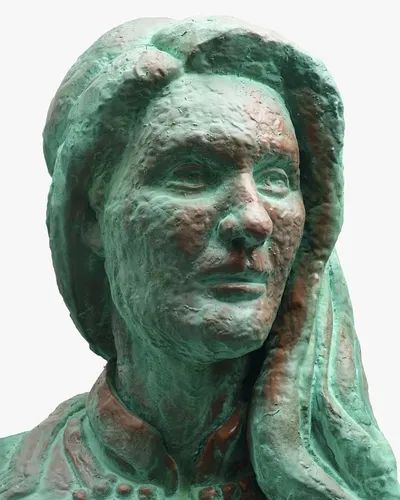
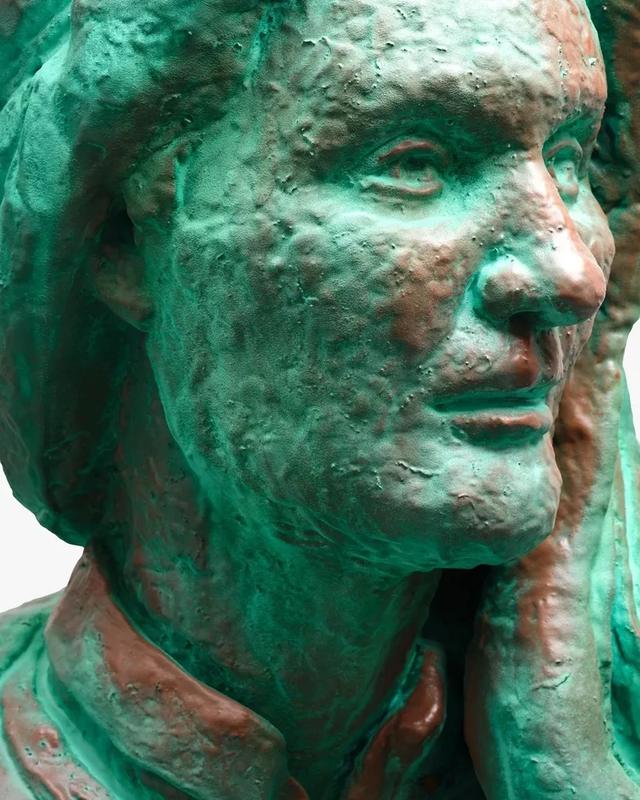
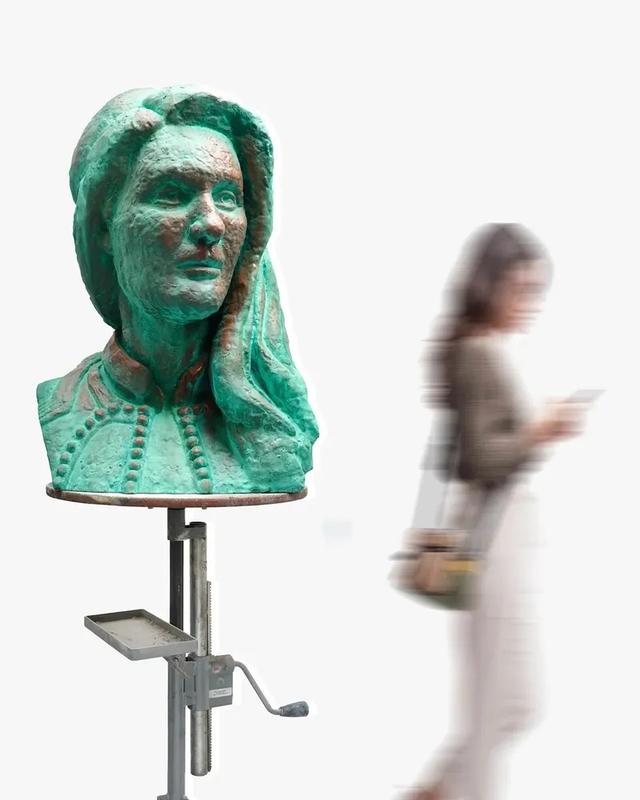
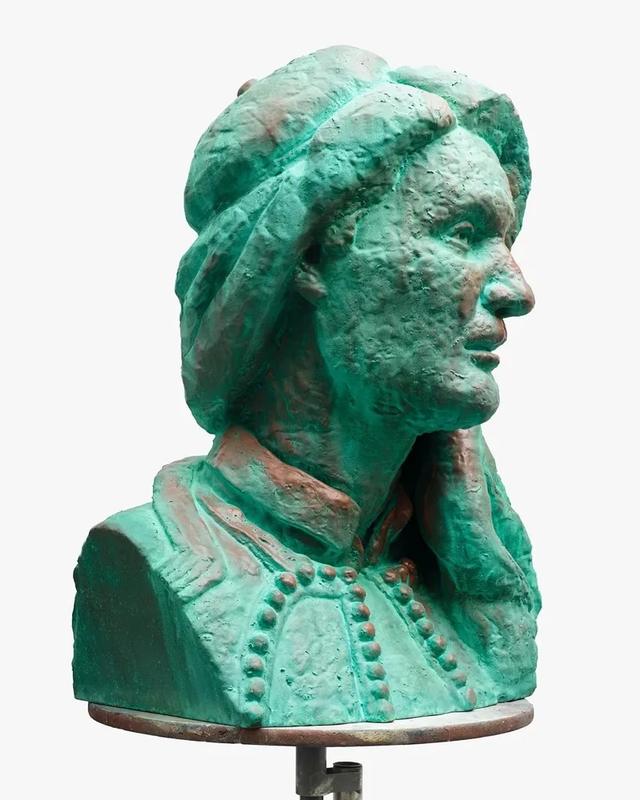
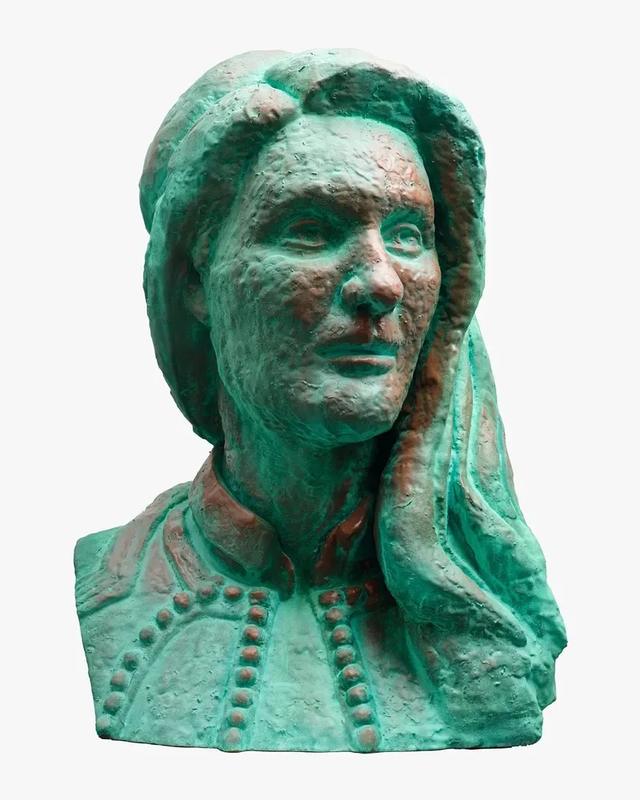
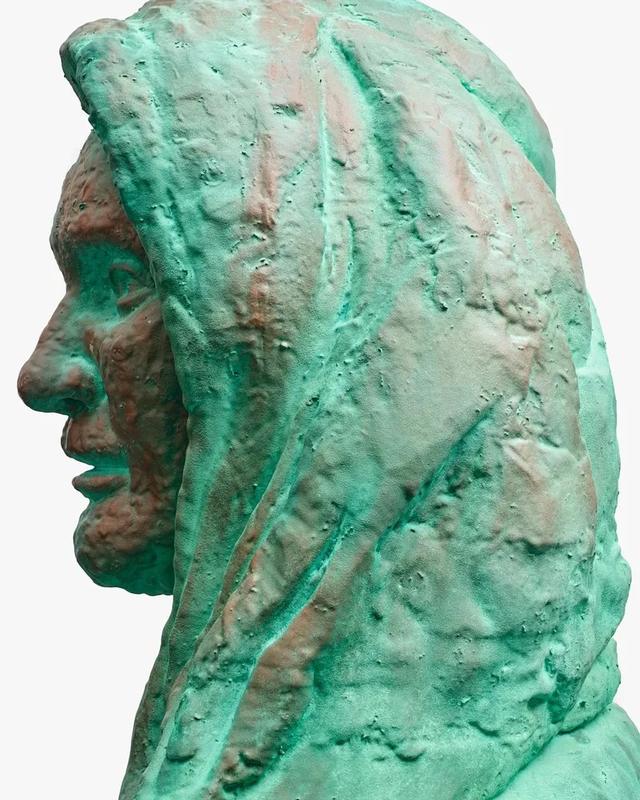
"Heroines is modeled on my wife, Eleftheria, who shares similar cultural history to my own, as one side of her family is also from Smyrna. Although her parents are younger than mine and thus lived through less of the terrible decade of the 1940s in Greece, many of the same influences persisted. Her processing and response differed from mine: she developed a forceful way of moving through the world, often closely guarded.
Given her fighter’s personality, and her name—which means 'Liberty'—it was clear that she would be the model for the sculpture honoring three female military leaders in the Greek War of Independence. Even so, the sculpture has an air of wariness or surprise, as if discovering that way of life is not as well adapted to the years beyond the war."
Greek War of Independence · 1820s
The Greek War of Independence, known to 19th century Greeks simply as “the Struggle,” was a war of indepen dence by Greek revolutionaries against the Ottoman Empire. Greece had been under Ottoman control for close to four centuries, since the fall of Constantinople, and all previous attempts at independence were unsuccessful.
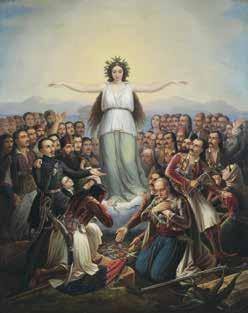
According to Wikipedia, “in 1814, a secret organization called Filiki Eteria (Society of Friends) was founded with the aim of liberating Greece, encouraged by the revolutionary fervor gripping Europe in that period. The Filiki Eteria planned to launch revolts in the Peloponnese, the Danubian Principalities, and Constantinople itself...The first revolt began on 6 March/21 February 1821 in the Danubian Principalities, but it was soon put down by the Ottomans. The events in the north urged the Greeks in the Peloponnese (Morea) into action and on 17 March 1821, the Maniots were first to declare war. In September 1821, the Greeks under the leadership of Theodoros Kolokotronis captured Tripolitsa. Revolts in Crete, Macedonia, and Central Greece broke out, but were eventually suppressed. Meanwhile, makeshift Greek fleets achieved success against the Ottoman navy in the Aegean Sea and prevented Ottoman reinforcements from arriving by sea. “Tensions soon developed among different Greek factions, leading to two consecutive civil wars. The Ottoman Sultan called in his vassal Muhammad Ali of Egypt, who agreed to send his son Ibrahim Pasha to Greece with an army to suppress the
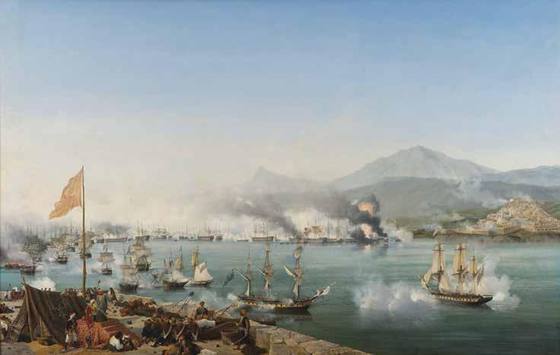
Bishop Germanos of Patra
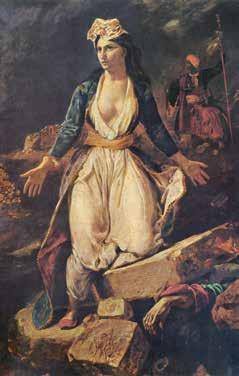
Musée des Beaux-Arts de Bordeaux, France. revolt in return for territorial gains. Ibrahim landed in the Pelo ponnese in February 1825 and brought most of the peninsula under Egyptian control by the end of that year. The town of Missolonghi fell in April 1826 after a year-long siege by the Turks. Despite a failed invasion of Mani, Athens also fell and the revolution looked all but lost.
“At that point, the three Great powers—Russia, Britain, and France—decided to intervene, sending their naval squadrons to Greece in 1827. Following news that the combined Ottoman– Egyptian fleet was going to attack the island of Hydra, the al lied European fleets intercepted the Ottoman navy at Navarino. After a tense week-long standoff, the Battle of Navarino led to the destruction of the Ottoman–Egyptian fleet and turned the tide in favor of the revolutionaries.
“The final major engagement of the war was the Battle of Petra in 1829, which occurred north of Attica. Greek forces un der Demetrius Ypsilantis, for the first time trained to fight as a regular European army rather than as guerrilla bands, advanced against Aslan Bey’s forces and defeated them. The Turks sur rendered all lands from Livadeia to the Spercheios River in ex change for safe passage out of Central Greece.”1 The war, which raged for nine years, ultimately led to the formation of modern Greece, and the victory is celebrated by Greeks around the world as Independence Day on March 25. dia, The Free Encyclopedia. Retrieved 13:32, November 19, 2023, from https://en.wikipedia.org/w/index.php?title=Greek_War_of_Independence&oldid=1185236634 The establishment of the Greek state would have vast implications:“The outcome of the Greek Revolution was the pivotal point on which the whole geopolitical map of Europe tilted, away from the 18th-century model of multi-ethnic, autocratically ruled empires and towards the 20th century model of the self-determination of nation-states.”2 This trend would continue throughout the 20th century, including the formation of the United Nations. Historian Mark Mazower would call it “Europe’s first successful national revolution, ultimately forcing kings and diplomats to change their entire approach to the management of the European peace.”3 Female Leaders in “The Struggle”
I was fascinated by three women who had leadership roles in the Greek revolution. These women were not merely figure heads, but active participants on the frontlines.
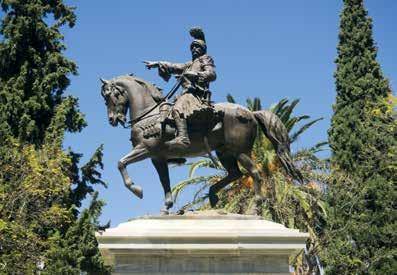
Statue of Theodoros
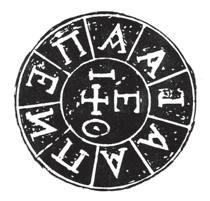
Seal of Philiki Etaireia. 5
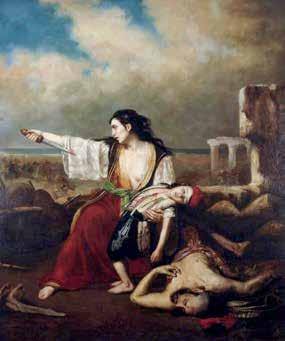
National Historical
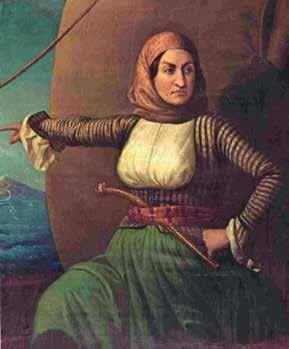
Greek War of Independencein 1771 in Constantinople…She was the daughter of Stavrianos Pinotsis, a captain from Hydra island…The Ottomans had im prisoned Pinotsis for his part in the failed Orlov revolt of 1769– against the Ottoman rule shortly after the birth of his daughter. Her father died soon afterward and the mother and child returned to Hydra.”4 She would eventually survive two husbands, the latter a wealthy captain and shipowner. She risked her fortune from her second husband to aid the cause of Greek Independence: “She later allegedly joined the Filiki Eteria secret society which sought to achieve Greek independence from the Ottoman Em pire, being among the few women to do so. Following the out break of the Greek War of Independence she commanded a fleet of Spetsiot ships which contributed to several campaigns, most notably the siege of Nafplion.
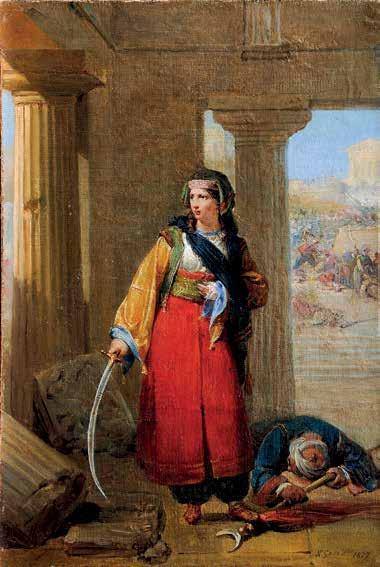
“Following the defeat of her faction in the Greek civil war in 1824, Bouboulina was briefly imprisoned and expelled to Spetses. She was killed on 22 May 1825, during the course of a family feud…A few days after her death, a Russian dele gation presented her with the honorary rank of Admiral of the Russian Navy granted by Tsar Alexander I of Russia, making her perhaps the first woman in world naval history to hold this title. In 2018 she was granted the title of Rear Admiral in the Hellenic Navy.”5 Manto Mavrogenous, another naval heroine, was a beauti ful woman of aristocratic lineage, but her genteel background did not prevent her from leaping into action when necessary. “When the struggle began, she went to Mykonos, the island of her origin, and invited the leaders of Mykonos to join the revo lution. She equipped, manned and “privateered” at her own ex pense, two ships with which she pursued the pirates who at tacked Mykonos and other islands of Cyclades. On 22 October 1822, the Mykonians repulsed the Ottoman Turks, who had debarked on the island, under her leadership.” 6 She also equipped men to campaign in the Peloponnese and sent forces and financial support to Samos when the island was threatened by the Turks.
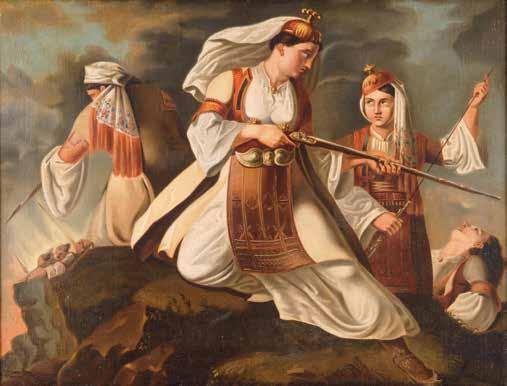
Her actions eventually made her a respected figure in Eu ropean circles: “Mavrogenous led enlightenment expeditions in Europe and addressed an appeal to the women of Paris, to side up with the Greeks. She moved to Nafplio in 1823, in order to be in the core of the struggle…When the war ended Ioannis Kapodistrias awarded her the rank of the Lieutenant General and granted her a dwelling in Nafplio, where she moved.”7 Domna Visvizi was a noblewoman of Thrace who, in the wake of her husband’s death in battle, immediately assumed command of their warship. “Visvizi took over command of the Kalomoira and its crew and continued to fight in the war. Vis vizi was reportedly a skilled and respected naval commander and her ship instilled fear among the Ottoman fleet. The Kalo moira not only partook in battles but also at times transported food and ammunition, for instance supplying soldiers on Ski athos and the forces of Odysseas Androutsos on the mainland. Androutsos later wrote that his forces would have perished without Visvizi’s aid.”8 She is said to have proclaimed: “We do not regret spending money, since it will be used to build the golden palace of liberty.” However, she struggled under extreme financial hardship after the war and was repeatedly denied financial aid from the gov ernment. “In 1845, Visvizi moved to Piraeus in Athens, where she lived in a small hut next to the sea. She died in poverty in 1850 at the age of 67.”9 For decades, historians underestimated the importance of all three of these war heroines. More recent reexaminations, however, have resulted in a better understanding of their pivotal roles in the war.
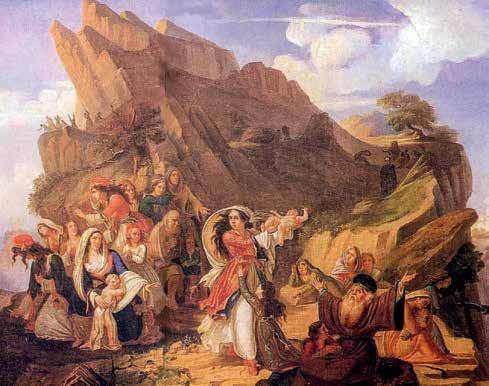
Sculptural
Precedent
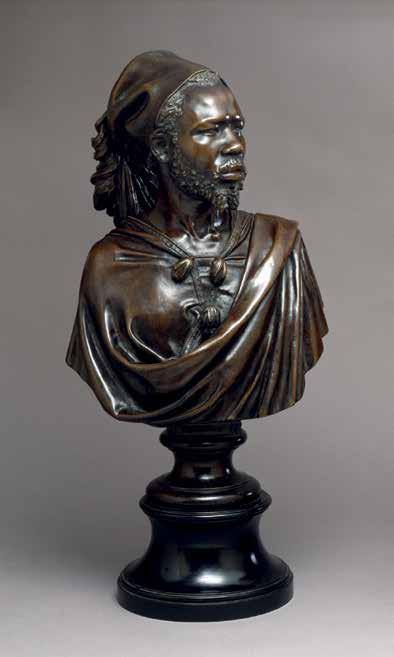
Τhe Art Institute of Chicago is one of my favorite muse ums in the world. It is not as physically large as the Metropolitan Museum of Art or the Louvre, however it has an encyclopedic collection with some of the best of of many kinds and periods of art. The Institute holds this sculpture by the French sculptor Cordier (1827–1905), who is best known for his ethnographic sculptures, many of them polychrome com bining exotic stones and metals. To gather material for these works, Cordier traveled extensively outside France, creating lifelike busts for the National Museum of Natural History in Paris. This piece, Saïd Abdullah, is the first ethnographic sculpture that he created. It is based on a former slave Cordier met in 1847, about the same time that slavery was abolished in all French colonies. The sculpture was well received in Paris; when it trav eled to London, Queen Victoria bought a bronze cast. Cordier stated: “Le beau n'est pas propre à une race priv ilégiée, j'ai émis dans le monde artistique l'idée de l'ubiquité du beau. Toute race a sa beauté qui diffère de celle des autres races. Le plus beau nègre n'est pas celui qui nous ressemble le plus.”10 This piece made such a strong impression on me that when I was working on Heroines, it came to my mind. The pose as well as the unusual blouse and cap served as touchstones for me when I was working on Heroines. Notably many of my sculptures do not include clothing; however, in the case of Heroines I felt it appropriate to clothe the female model in traditional men’s military jacket and cap, acting as signifiers to the viewer of the role these brave leaders took in that war.
- 1. Wikipedia contributors. (2023, November 15). Greek War of Independence. In Wikipe-
- 2. Beaton, Roderick. (January 2021.) “The significance of the 1821 Revolution for
- 3. Mazower, M. (2021). The Greek Revolution: 1821 and the Making of Modern Europe.
- 4. Wikipedia contributors. (2023, September 25). Laskarina Bouboulina. In Wikipedia, The Free Encyclopedia. Retrieved 17:45, November 15, 2023, from https://en.wikipedia. org/w/index.php?title=Laskarina_Bouboulina&oldid=1176950334
- 5. Wikipedia contributors. (2023, September 25). Laskarina Bouboulina. In Wikipedia, The Free Encyclopedia. Retrieved 17:45, November 15, 2023, from https://en.wikipedia. org/w/index.php?title=Laskarina_Bouboulina&oldid=1176950334
- 6. Wikipedia contributors. (2023, October 18). Manto Mavrogenous. In Wikipedia, The Free Encyclopedia. Retrieved 13:38, November 19, 2023, from https://en.wikipedia. org/w/index.php?title=Manto_Mavrogenous&oldid=1180786138
- 7. Wikipedia contributors. (2023, October 18). Manto Mavrogenous. In Wikipedia, The Free Encyclopedia. Retrieved 13:38, November 19, 2023, from https://en.wikipedia. org/w/index.php?title=Manto_Mavrogenous&oldid=1180786138
- 8. Wikipedia contributors. (2023, June 1). Domna Visvizi. In Wikipedia, The Free Ency - clopedia. Retrieved 13:47, November 19, 2023, from https://en.wikipedia.org/w/index. php?title=Domna_Visvizi&oldid=1158049230
- 9. Wikipedia contributors. (2023, June 1). Domna Visvizi. In Wikipedia, The Free Ency - clopedia. Retrieved 13:53, November 19, 2023, from https://en.wikipedia.org/w/index. php?title=Domna_Visvizi&oldid=1158049230
- 10. “CORDIER, Les Nubiens, MuMa Le Havre: site officiel du musée d’art moderne