Asia Minor Catastrophe
The Refugee — To Lose and to Rebuild
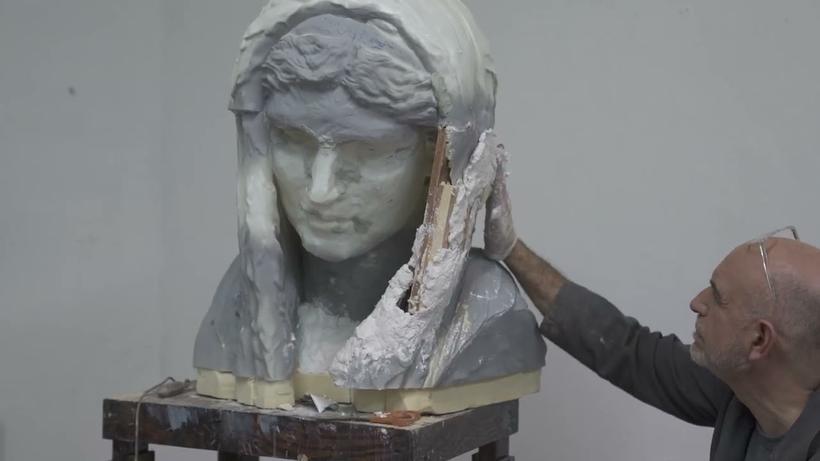 Play documentary
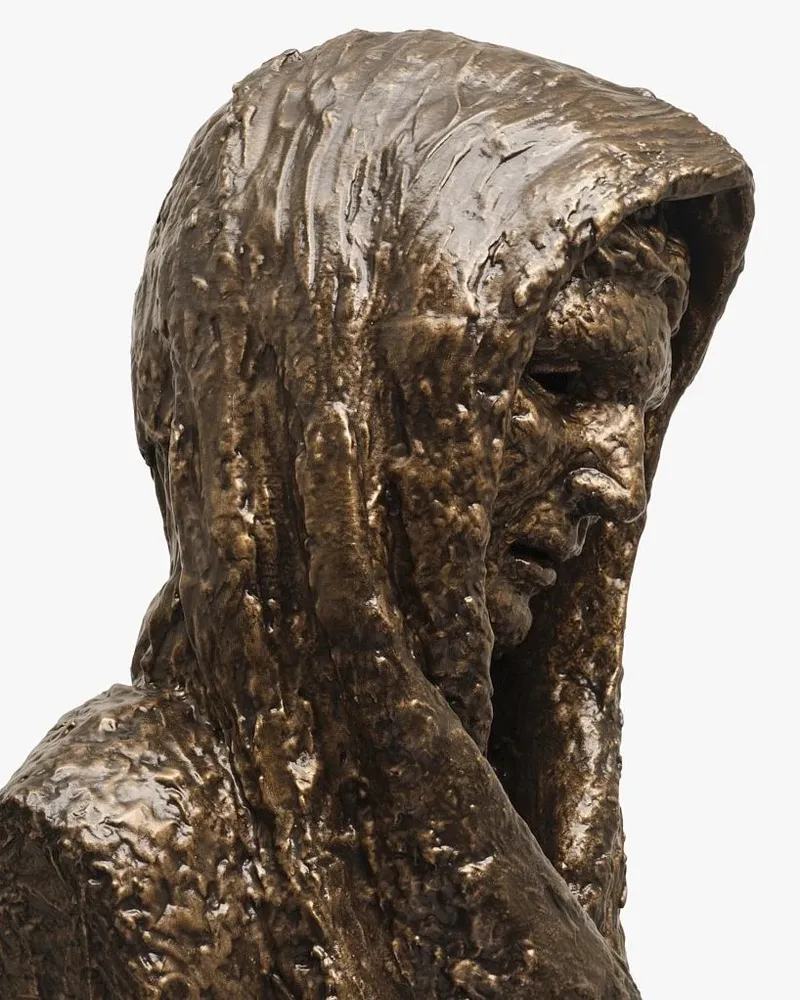 Hover to magnify · click to open
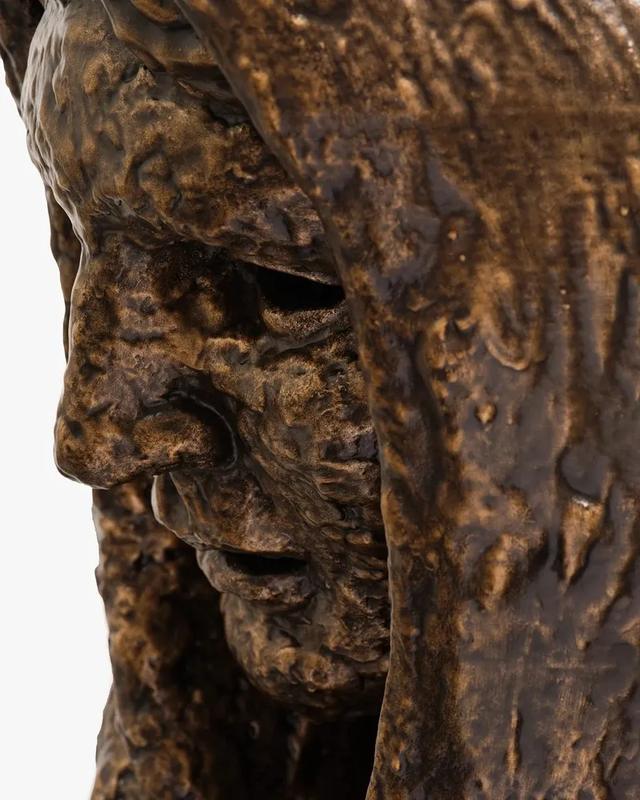 Detail · tap
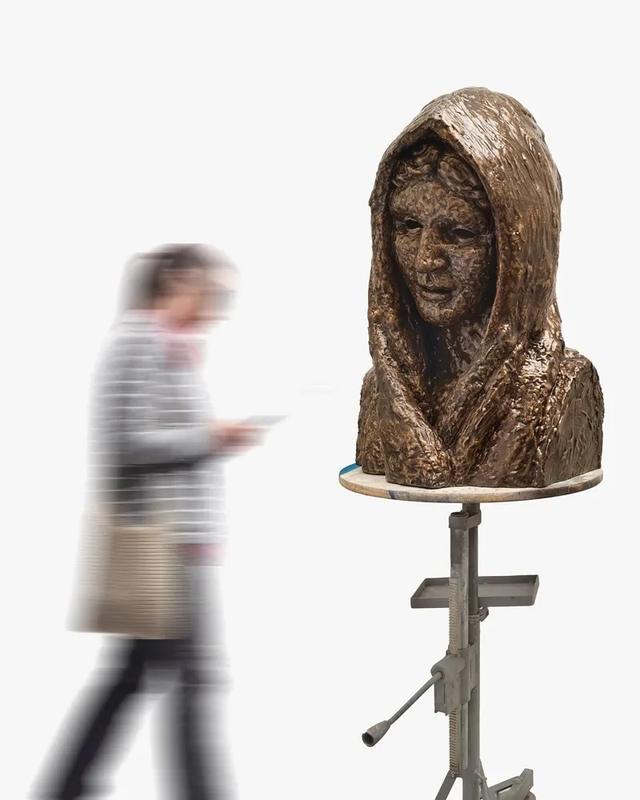 View · tap
 View · tap
 View · tap
 View · tap
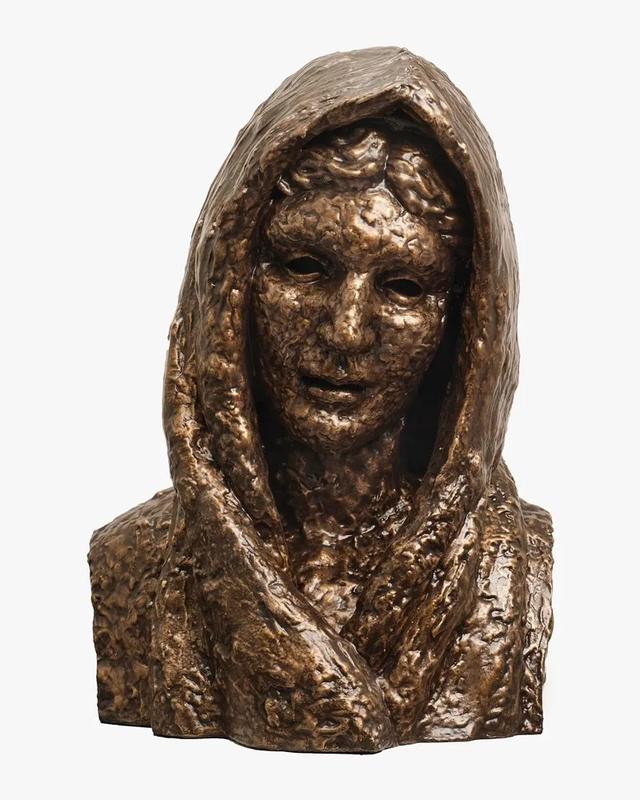
"My maternal grandmother fled burning Smyrna as a young woman in 1922, during the Asia Minor Catastrophe. She lost a prosperous home in a cosmopolitan city and arrived in Greece to compatriots who were not very welcoming. She married and had seven children, of whom five survived into adulthood. Later in life she lived at different times with different children, including with my parents and me in the New York area. She said little to me about her experiences, and yet, being a sensitive type, I intuited a great deal. She was a true stoic in the years I knew her.
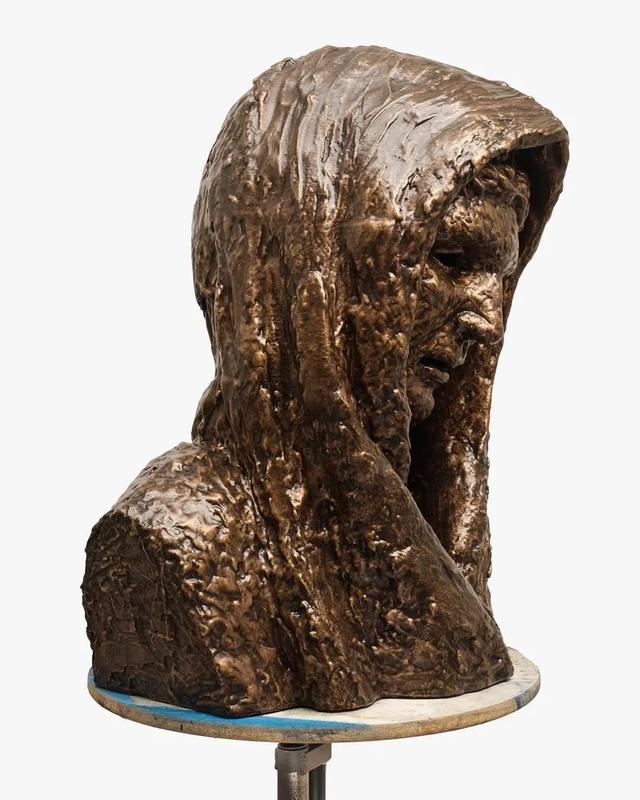
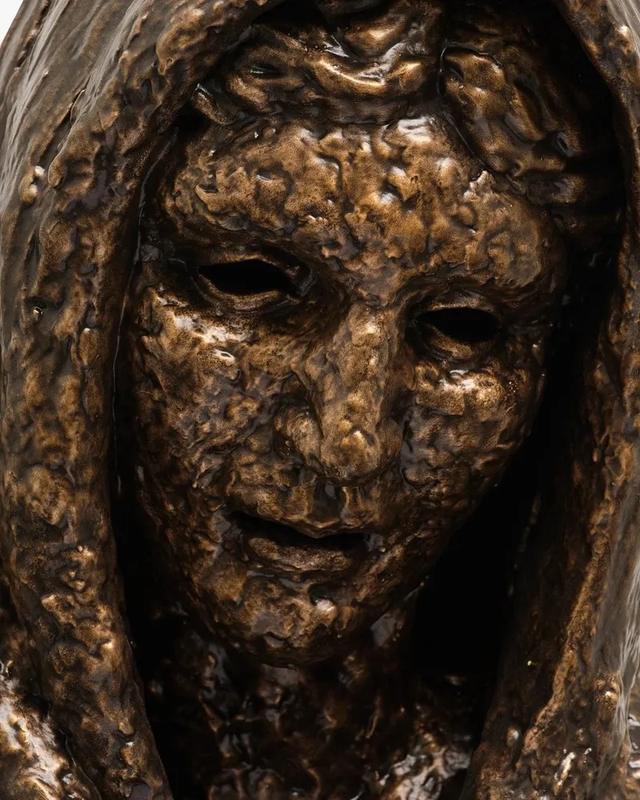
As to the sculpture The Refugee, I sought to convey her emotions around September 1922 when she was escaping her burning home and was arriving in Piraeus, the port city of Athens. I sought to convey shock as she experiences the pain and extreme loss—she does so quietly, with dignity.
The Hellenic Head you see in the exhibition was enlarged and adapted into a monumental public sculpture to mark the centennial of the destruction of Smyrna. Refugee—Woman of Smyrna was unveiled in September 2022, in an Athenian neighborhood shaped by refugee history. Viewers have told me they see their own grandmothers in her face. I can think of no higher compliment."
Asia Minor Catastrophe · 1920s
The 1920s brought a major influx of refugees to Greece, the majority of them from Asia Minor. The region had long been home to many Greek people, including com munities of Cappadocian Greeks and Pontic Greeks that had inhabited the region since the 13th century BC. As the Ottoman Empire came to an end, areas of Asia Minor that had been home to tens of thousands of Greeks were annexed by Turkey, and the demographic makeup of many cities within the region were suddenly and inexorably altered. Many of the Orthodox Chris tians within what is now Turkey, including at least 900,000 people from Asia Minor alone, fled to resettle in mainland Greece, setting off a decade-long refugee crisis.
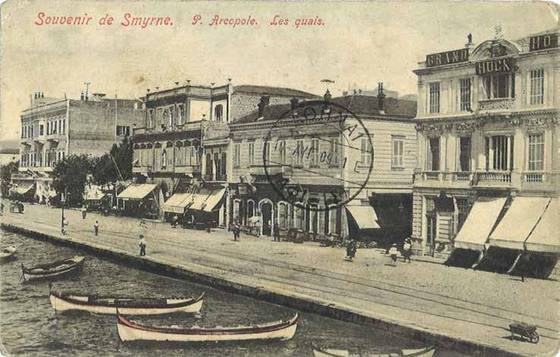
A major event in this refugee crisis was the destruction of the city Smyrna, which effectively ended the Greco-Turkish War. Prior to the fire, Smyrna was home to more Greek citizens than even Athens, the capital of Greece. It was, according to most accounts, a jewel of a city: “Smyrna was a city of a unique cosmopolitan character, full of European travelers and traders, especially during the last decades of the 19th and the early 20th centuries. Turks, Greeks, Jews and Armenians lived together in peace. The Greek community of the city was the largest in population and its members were highly esteemed
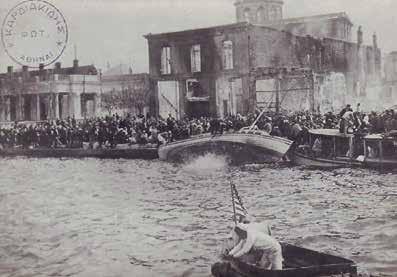
1920sprofessionals, working as bankers, traders, lawyers and doctors.”1 But the city, as it existed in 1922, would not survive the war. As the city burned, tens of thousands of Greek and Ar menian refugees crammed the waterfront to escape from the fire. They were forced to remain there under harsh conditions for nearly two weeks. The number of casualties from the fire is not precisely known; there are differing estimates, some of which place the number of Greeks and Armenians killed as high as 125,000.
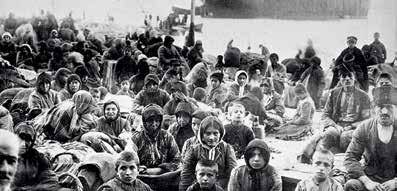
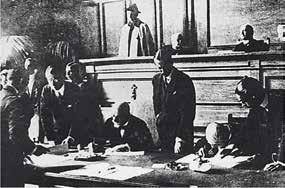
Many firsthand accounts of the disaster survive, like this one from British Lieutenant A. S. Merrill: “All morning the glow and then the flames of burning Smyrna could be seen. We arrived about an hour before dawn and the scene was indescribable. The entire city was ablaze and the harbor was light as day. Thousands of homeless refugees were surging back and forth on the blistering quay–panic-stricken to the point of insanity. The heartrending shrieks of women and children were painful to hear. In a frenzy they would throw themselves into the water and some would reach the ship. To attempt to land a boat would have been disastrous. Several boats tried and were immediately stopped by the mad rush of a howling mob...The crowds along the quay beyond the fire were so thick and tried so desperately to close abreast the men-of-war anchorage that the masses in the stifling center could not escape except by sea. Fortunately there was a sea breeze and the quay wall never got hot enough to roast these unfortunate people alive, but the heat must have been terrific to have been felt in the ship 200 yards away. To add to the confusion, the packs belonging to these refugees – con sisting mostly of carpets and clothing – caught fire, creating a chain of bonfires the length of the street.”2 The fire completely destroyed the Greek and Armenian quarters of the city, leading to thousands of people fleeing to Greece to seek safety and a new life. People who had enjoyed life in a cosmopolitan city were suddenly displaced. The famed Onassis Following the destruction of Smyrna and the end of the Greco-Turkish War, the two countries signed a peace pact in Jan uary 1923 in Lausanne, Switzerland. A major element of this treaty was the Convention Concerning the Exchange of Greek and Turkish Populations, an attempt at social engineering that required Orthodox Christians to move to Greece and Muslims to move to Turkey, regardless of the language they spoke or the length of time they had been in their current country. The con vention affected a vast number of people, an estimated 1.3 million immigrants to Greece and as many as 400,000 immigrants to Turkey. Consequently, both sides of this population exchange suffered traumatic effects. Professor Ayse Lahur Kirtunc, a Cretan Muslim expelled to Turkey stated in an interview: "Eighty years have passed, and the memories are warring with another, ripe for distortion. But the core of every migrant's statement remains the same. Birth in one place, growing old in another place. And feeling a stranger in the two places.”3 59–89 from International Journal on World Peace, Volume 31, No. 1, March 2014 p. 83.
Rebuilding a Life in Greece
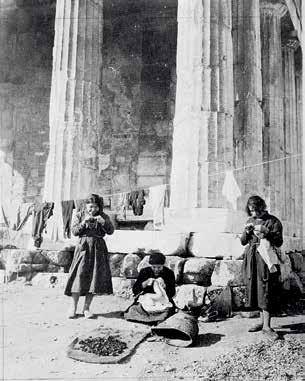
Even those migrants from Asia Minor who managed to survive the journey to mainland Greece had a very difficult road ahead of them. Greece was already bearing a massive load of refu gees, and the agreed-upon population exchange would further exacerbate issues of resettlement: "The deportations brought significant challenges: social, such as forcibly being removed from one's place of living, and more practical such as abandoning a well-developed family business…Regardless if they settled in urban or rural areas, the vast majority of the refugees arrived in Greece impoverished and often sickly, placing enormous de mands on the Greek health care system.”4 During this period of upheaval, the death rate in refugee communities was four times that of the birth rate.
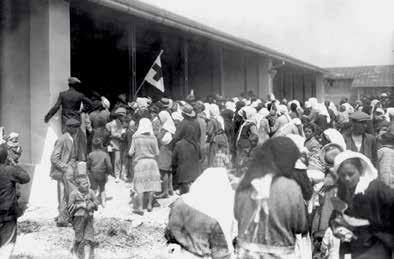
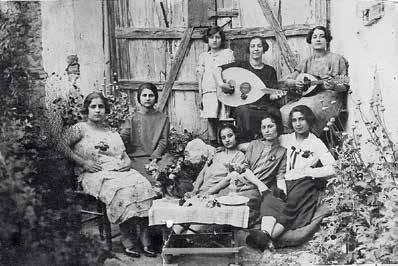
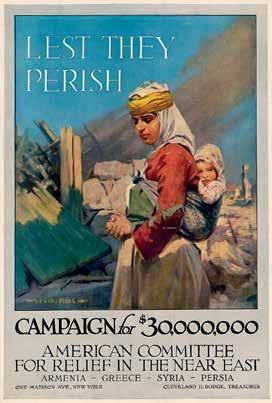
The United States was instrumental in providing aid to the refugees: “The lives of hundreds of thousands of Greek refugees from Asia Minor, Pontus, and Eastern Thrace were saved thanks to the humanitarian initiatives of American charitable organizations, mainly the American Red Cross and the Near East Relief. These two organizations practically single-handedly undertook the extremely difficult task of providing aid on the spot to Greek refugees who otherwise would have likely been Greece _and_Turkey&oldid=1190894850 condemned to death by diseases, malnutrition, and other hardships. The gravity of the situation demanded immediate and effective action and the United States was by far the first to respond to the Greek appeals for help. Sometimes the numbers speak for themselves even though they cannot always describe the splendor of philanthropy. The total cost of the relief work undertaken by the American Red Cross for the period from October 1922 to 30 June 1923 amounted to the astonishing $2,605,696.09. ”5 Despite the initial hurdles, the refugee community would eventually bring much to the economy of Greece by their pres ence there: “The arrival of the Asia Minor Greeks resulted in the rise of the agricultural production of the state by 400%. The arable land increased by 55%. The Nikolaos Plastiras Govern ment decided on February 14, 1923 to further divide the arable land of Greece, in order for the refugees and their descendants to be the owners of their own land…New industries were established in short time by the skilled refugee population (e.g. carpet Greek Refugees, 1922–1923. From Genocide Studies and Prevention: An International Journal, Volume 6, Issue 1, Article 13. industries). In addition, many of them later became successful ship-owners (e.g. Aristotle Onassis).”6 Beyond economics, the refugees enriched the cultural landscape of Greece: “New liberal ideas arrived along with the ref ugees, especially those coming from Smyrna. The influence of the refugees was particularly important in the cultural field.” 7 From the blending of the already existing Greek population with the population of refugees, a new Greek culture was forged, which is still familiar to us today. Important elements of Greek cultural identity like iconic dances (zeibekiko and haspiko) and a cuisine rich in eggplants, tomatoes and spices have their roots in Asia Minor.
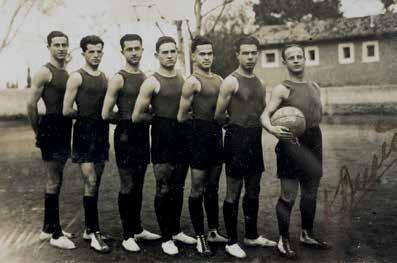
Notably, the nation’s most popular sport, soccer, landed in Greece largely because of the refugee population. Some foot ball clubs, like Apollon Smyrnis and Panionios (Greece’s oldest F.C) were transplanted directly from their original homes in Asia Minor. Others, like the popular AEK in Athens and PAOK in Thessaloniki were originally founded by former members of Pera in Constantinople.8 It must be acknowledged, however, that these developments were silver linings to what was undoubtedly a period of extreme hardship for over a million people. Because of the scale of the tragedy almost every contemporary Greek family has some historical connection to what many still call The Catastrophe. The Greek writer Dimitris Pentzopoulos wrote, “It is no exaggeration to call the year 1922 the most calamitous in modern Hellenic history.”9
Sculptural
Precedent I
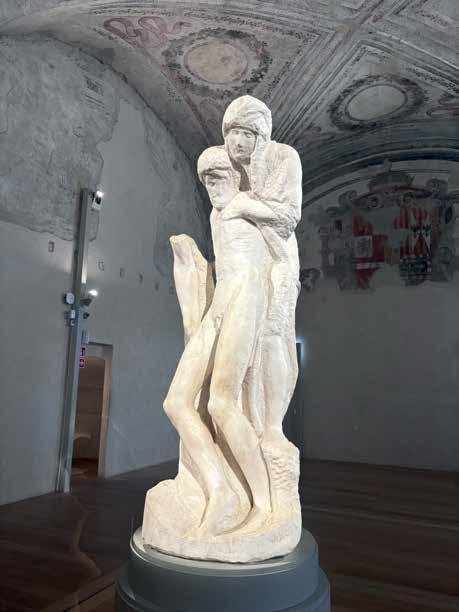
have long been astounded by - and sought to learn from - the genius of Michelangelo Buonarotti (1475–1564). That one human being would excel in so many different fields (drawing, sculpture, painting, architecture, poetry - he was even an as tute businessman) can only be described as genius. In addition to studying the lectures of William Wallace, the exhibitions of Carmen Bambach, the novel of Irving Stone (and entertaining movie that came out of it), I have been fortunate to experience his sculpture, painting and architecture in person. As a sculp tural precedent for The Refugee, given that the first name of my maternal Grandmother - who was a refugee from Smyrna - was Maria, I was drawn to the three Pietà sculptures made by Il Divino over the course of six decades: the Madonna della Pietà (1498–1499) in Rome; the four-figure Deposition of Christ (1547–1555) in Florence and the Rondanini Pietà (1552–1564) in Milan. Each can be said to have served as a sculptural prec edent for The Refugee, however, I will single out the Rondanini. Wikipedia: “The Rondanini Pietà was begun before The Deposition of Christ was completed in 1555. In his dying days, Michelangelo hacked at the marble block until only the dismembered right arm of Christ survived from the sculpture as originally conceived. The elongated Virgin and Christ are a departure from the idealised figures that exemplified the sculptor's earlier style… The unfinished quality of the work fits with Michelangelo's late progress away from naturalism and humanism and toward a mystical Neoplatonism, in which he conceived of a sculpture as latent in the marble and requiring merely the removal of su perfluous material; in this manner, he seems to have deprived his human symbols of corporeal quality in an attempt to convey directly a purely spiritual idea.”
In addition to the expression of the Virgin Mary, I was drawn to the rough texture that Michelangelo left over the whole sur face of the large sculpture. Did he leave it this way because he “ran out of time” or was this intentional? Wikipedia: “It has also been suggested that the sculpture should not be considered unfinished, but a work in a continuous process of being made visible by the viewer as he or she moves around to see it from multiple angles.”10 Piet%C3%A0#External_links
- 1. Europeana Blog contributors. (2022, September 14) The Asia Minor Catastrophe. In Europeana. Retrieved January 10, 2024, from https://www.europeana.eu/en/blog/ the-asia-minor-catastrophe
- 2. Naimark, Norman M. Fires Of Hatred: Ethnic Cleansing In 20th Century Europe. (Harvard, 2001). p. 50. family were among the refugees as was the family of my ma - ternal grandmother.
- 3. Kaloudis, George "Ethnic Cleansing in Asia Minor and the Treaty of Lausanne" pp.
- 4. Wikipedia contributors. (2023, December 20). Population exchange between Greece and Turkey. In Wikipedia, The Free Encyclopedia. Retrieved 16:27, December 20, 2023, from https://en.wikipedia.org/w/index.php?title=Population_exchange_between_
- 5. Klapsis, Antonis. (2011, April). Research Note: American Initiatives for the Relief of
- 6. Wikipedia contributors. (2023, December 26). Greek refugees. In Wikipedia, The Free Encyclopedia. Retrieved 18:43, January 10, 2024, from https://en.wikipedia. org/w/index.php?title=Greek_refugees&oldid=1191833573
- 7. Wikipedia contributors. (2023, December 26). Greek refugees. In Wikipedia, The Free Encyclopedia. Retrieved 18:43, January 10, 2024, from https://en.wikipedia. org/w/index.php?title=Greek_refugees&oldid=1191833573
- 8. Wikipedia contributors. (2023, November 21). Football in Greece. In Wikipedia, The Free Encyclopedia. Retrieved 16:07, January 17, 2024, from https://en.wikipedia. org/w/index.php?title=Football_in_Greece&oldid=1186245844
- 9. Wikipedia contributors. (2022, June 26). Burning of Smyrna. In Wikipedia, The Free Encyclopedia. Retrieved 16:14, July 20, 2022, from https://en.wikipedia.org/w/index. php?title=Burning_of_Smyrna&oldid=1095063033
- 10. Wikipedia contributors. Rondanini Pietà. In Wikipedia, The Free Encyclopedia. Retrieved 1:37 PM, October 17, 2024, from https://en.wikipedia.org/wiki/Rondanini_