Nazi Occupation and Greek Civil War
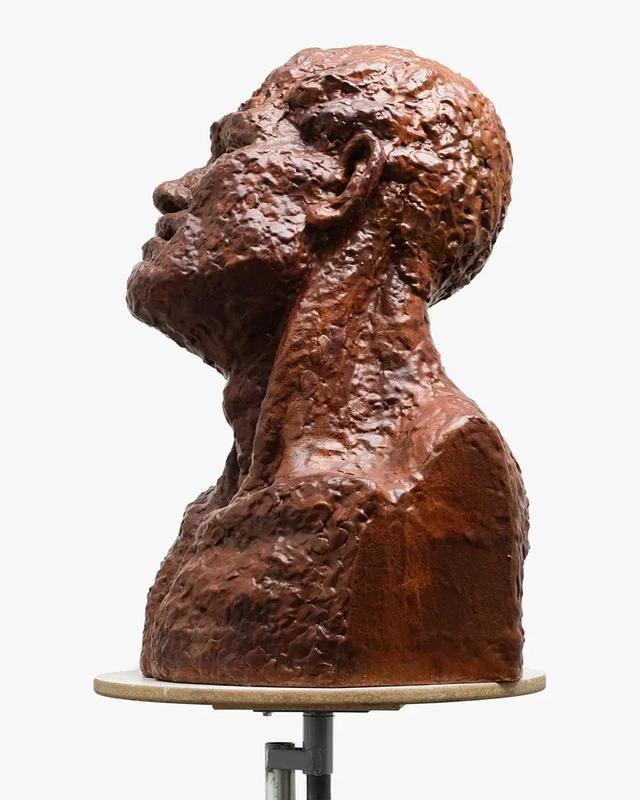
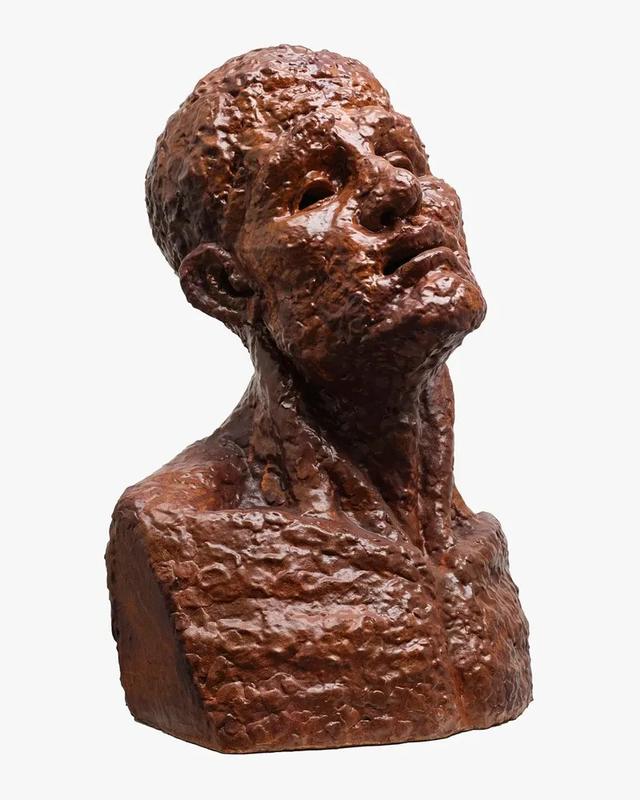
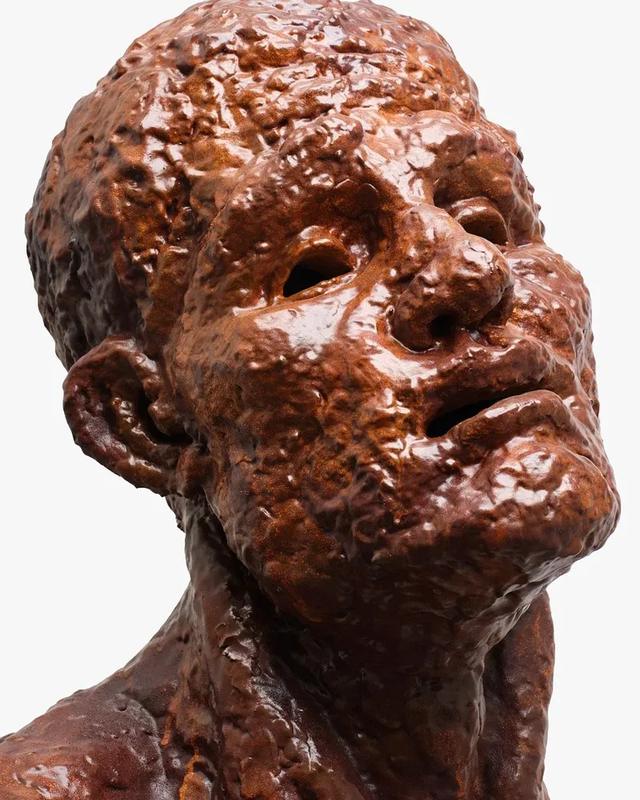
Man of Two Wars — Battles Within and Without
 Play documentary
 Hover to magnify · click to open
 Detail · tap
 View · tap
 View · tap
 View · tap
 View · tap
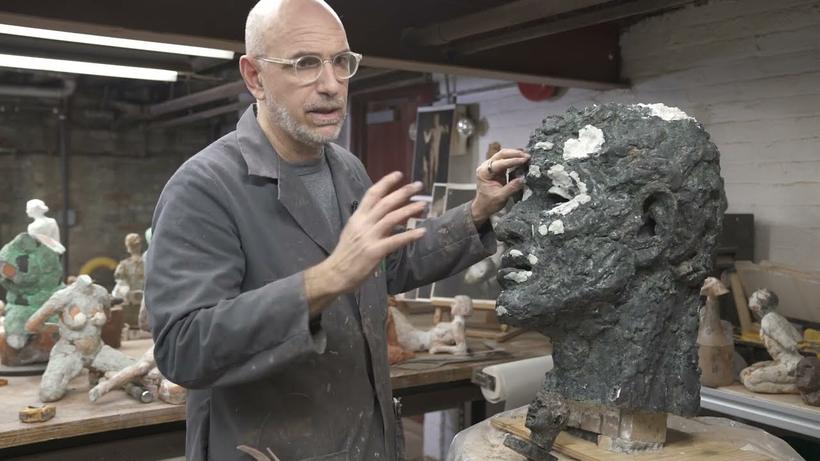
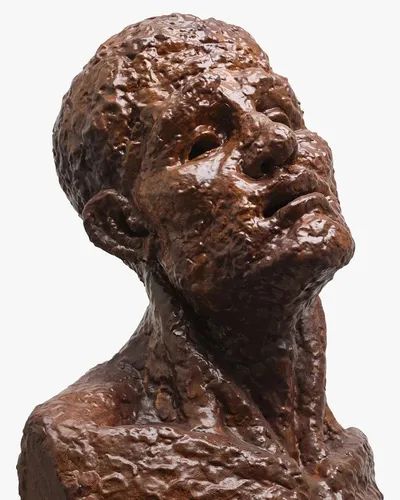
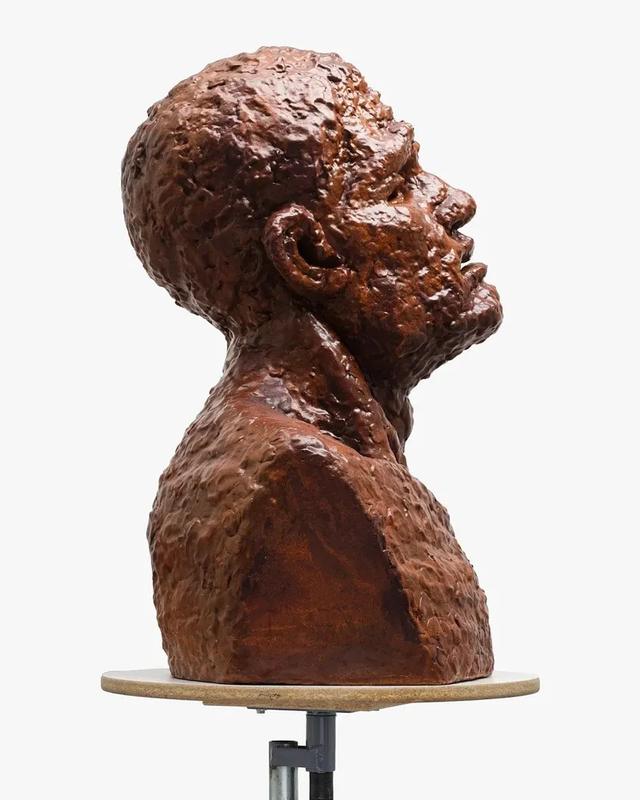
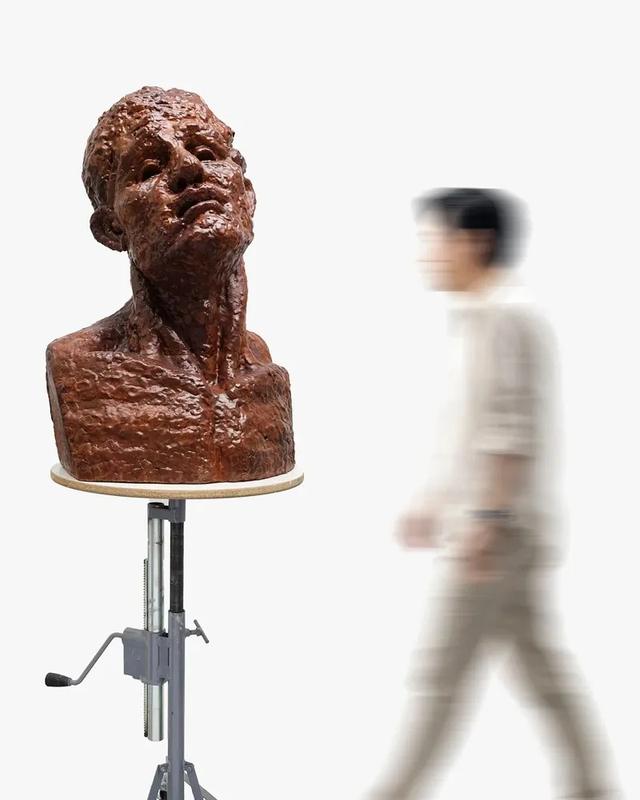
"The first three heads—Refugee, Thalia, and Archon— convey the emotional environment in which I was raised. I hope that the sculptures are successful enough that you can pick up the emotions rather than my describing them to you in writing. I then turned my gaze on myself and began to recognize my own burdens. The full name of the sculpture is Man of Two Wars: The Battle Within and Without, referring to my experience that I had to fight on both the inside and outside fronts, often at the same time. One front was the external: to build a life across two countries, two careers, and even two marriages. The other was internal: my own psychological issues, which I worked hard to resolve and perhaps, to a large extent, have managed to. My parents and grandparents did not have the option of processing their trauma; they had to ignore it and focus on surviving. Born further away from the physical trauma, and with contemporary resources available to me, I had to undertake the work of understanding and healing whatever I could for my own well-being—and for the quality of life in my family. As to the sculpture, it is inspired by one of the heads of Rodin’s Burghers of Calais. You may know the story of the six burghers who turned themselves over to be hanged during the siege of Calais in 1347. With dignity they marched to their death (and by luck were spared by the pleading of the king’s pregnant wife). In my sculpture I convey a similar agony—perhaps at a low point, perhaps not far from when the healing coalesces and I come out on the other, better side. No doubt my making this sculpture was in itself part of my healing process."
Nazi Occupation and Greek Civil War · 1940s
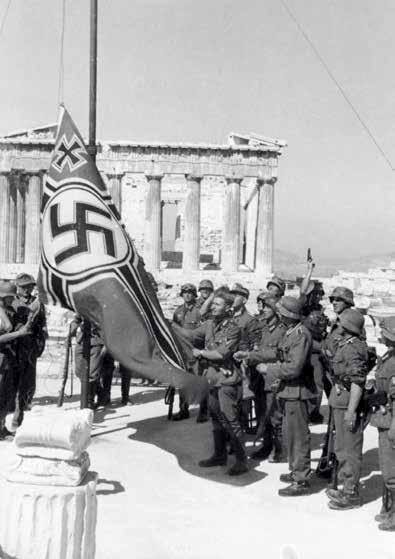
On 6 April 1941, German forces invaded Greece after the failed Italian attack of October 1940. The Hellenic Army had pushed Italian troops back into Albania, but the German Blitzkrieg, launched while Greek units were still committed on that front, quickly broke through the country’s defenses. Within weeks the mainland had fallen; by June 1941, after the Battle of Crete, the occupation was complete. The Greek government fled into exile, while Germany, Italy, and Bulgaria divided the country into zones and installed a collaborationist administration in Athens.1 The occupation quickly devastated Greece’s economy and infrastructure. Industrial capacity, transport networks, and shipping were ruined; large parts of industry, bridges, ports, and railway facilities were destroyed or rendered unusable. At the same time, German and Italian authorities requisitioned food and raw materials, imposed a forced “occupation loan” on the Greek state, and prioritized their own supply needs over the survival of local civilians. 2 man Pasts: An Initiative for Students and Young Scholars. Retrieved November 25, 2025, from https://greekgermanpasts.eu/about-the-project/ (Greek German Pasts)
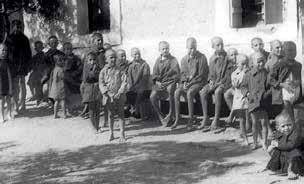
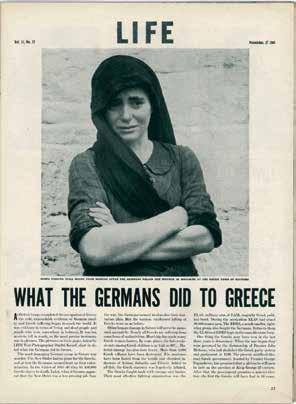
These policies helped trigger the Great Famine of 1941–43. Axis requisitions, disruption of internal transport, collapse of domestic production, and the British naval blockade meant that cities and islands were cut off from food supplies. In Athens and Piraeus alone, tens of thousands died of starvation; nationwide, hundreds of thousands perished.3 Malnutrition, disease, and the black market defined everyday life.
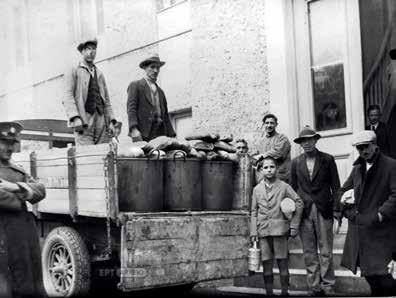
Terror and repression were as central to occupation policy as economic plunder. German, Italian, and Bulgarian forces used hostages, executions, and village burnings to enforce “collec tive responsibility,” punishing communities for real or suspect ed resistance. Tens of thousands of civilians were executed and hundreds of villages destroyed or abandoned. 4 Massacres at Kalavryta (1943) and Distomo (1944), where whole communi 2025, from https://yourhomeoncrete.com/en/about_crete/west_of_chania/skines (Your Home on Crete) ties were killed in reprisal, became enduring symbols of Nazi brutality and are now commemorated as “martyred towns and villages.”5 The occupation also brought the near-destruction of Greek Jewry. Before the war, roughly 75,000–80,000 Jews lived in Greece, with the largest community in Thessaloniki, a major Sephardic center. In 1943, the German authorities deported almost the entire Jewish population of Thessaloniki—around 50,000 people—to Auschwitz-Birkenau; very few survived. Smaller communities in places like Ioannina, Rhodes, and Kos were also largely annihilated. In total, well over four-fifths of the prewar Jewish population of Greece perished in the Holocaust.6 There were, however, pockets of rescue and solidarity. Some Christian families, local networks, and clergy helped to hide Jews or facilitate their escape to the mountains or to territories still under Italian control. In Athens, Archbishop Damaskinos and elements of the resistance movement assisted Jews in obtaining false papers and reaching safer areas.7 These efforts, while limited compared to the scale of destruction, remain an important part of the moral landscape of the occupation.
Resistance emerged early and took many forms. Isolated acts of defiance soon grew into organized movements, especially in mountainous regions where guerrilla warfare was easier. The largest resistance front, the National Liberation Front (EAM) with its armed wing ELAS, combined military struggle with a program of liberation and social reform. Other groups included EDES, closer to the British and the exiled government, and smaller formations such as EKKA. Youth organizations like EPON mobilized students and young workers through underground newspapers and sabotage. 8 States Holocaust Memorial Museum’s Holocaust Encyclopedia). Retrieved November 25, 2025, from https://www.myjewishlearning.com/article/the-holocaust-in-greece/ (My Jewish Learning) file). Retrieved November 25, 2025, from https://collections.yadvashem.org/en/righ teous/4043030 (@yadvashem)
Cretan resistance is often highlighted for its ferocity; during and after the Battle of Crete civilians attacked German para troopers with improvised weapons, and local andartes (guerril las) kept up resistance for years, forcing the occupiers to devote considerable resources to the island. At the same time, prison camps such as Chaidari near Athens and execution grounds like the Kaisariani rifle range, together with collaborationist Security Battalions backed by the Germans, became synonymous with torture, reprisals, and civil strife.9 By the time German forces began withdrawing in late 1944, a significant percentage of the population was dead, infrastructure and industry lay in ruins, and social relations had been deeply marked by occupation, resistance, and collaboration. 10 Liberation did not bring immediate peace, but rather opened a new and violent chapter.
The Greek Civil War
The resistance landscape that had formed under the occupation contained serious ideological and political fractures. EAM–ELAS, dominated by the Communist Party of Greece (KKE), had become the largest and most effective resistance force in much of the country. EDES and other groups, aligned more closely with the exiled government and the British, often clashed with EAM– ELAS even before the Germans left.11 After liberation in October 1944, a national unity government under George Papandreou attempted to integrate the resistance forces and restore order. Disputes over disarmament, the army, and the political direction of the country quickly escalated. In December 1944, tensions exploded in Athens in the Dekemvriana (“December Events”), when a mass pro-EAM demonstration was fired upon, leading to dozens of deaths and weeks of street fighting between ELAS and British-backed government forces, with British troops intervening directly in the capital.12 The Varkiza Agreement of February 1945 formally ended the Dekemvriana. EAM–ELAS agreed to disarm in exchange for promises of amnesty and political freedoms. In practice, however, the disarmament of the left was not matched by effective restraint on right-wing groups, many of which included former collaborators. The period that followed, often called the “White Terror,” saw systematic persecution of former resistance fighters and left-leaning citizens through arrests, beatings, murders, and dismissals from public employment. 13 This cycle of retaliation and fear helped lay the groundwork for renewed armed conflict.
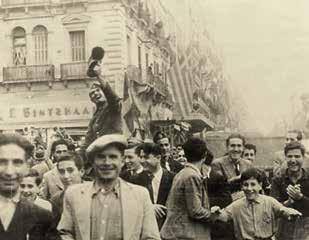
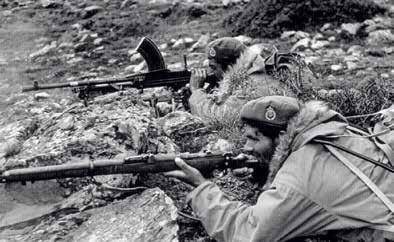
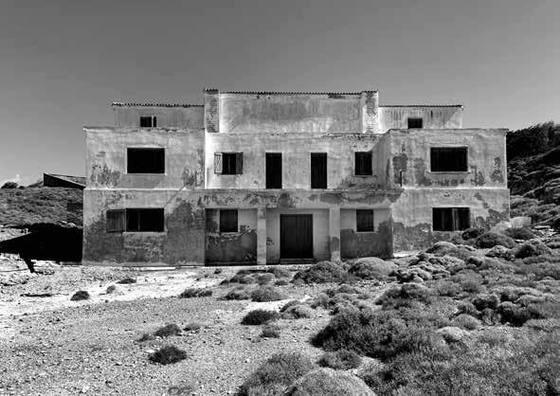
The Greek Civil War is usually dated 1946–49. Government forces, backed first by Britain and later by the United States under the Truman Doctrine, faced the Democratic Army of Greece (DSE), linked to the KKE and drawing many cadres from former ELAS fighters and mountain communities shaped by occupation and post-Varkiza repression. The conflict combined an internal struggle over Greece’s political future with the emerging logic of the Cold War.14 For rural peasants, the civil war often meant being trapped between two armed camps. When guerrillas entered a village seeking food, recruits, or shelter, villagers risked punishment if they cooperated—and suspicion if they refused. When government troops or right-wing militias arrived later, those same villagers could be denounced as communist sympathizers, facing imprisonment, exile, or worse. In some regions, whole villages were evacuated to deny resources to the insurgents, uprooting long-established communities. became a powerful symbol of this era. Used as a military prison and “re-education” camp, it held thousands of political prisoners, including former resistance fighters, intellectuals, and conscripts suspected of leftist sympathies. Torture, forced “confessions,” and attempts at ideological conversion were common.15 The civil war ended in 1949 with the defeat of the DSE. Several factors contributed to the outcome: the superior material resources and air power of the government, American military and economic assistance, the split between Tito’s Yugoslavia and Stalin’s Soviet Union (which disrupted the guerrillas’ supply lines), and the deep exhaustion of a population that had endured nearly a decade of crisis. Greece soon joined NATO, aligning firmly with the Western bloc.
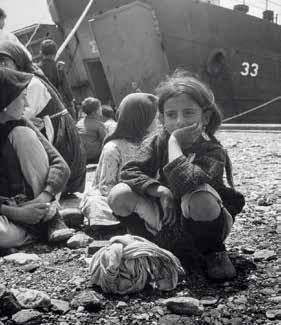
The cost, however, was immense. Beyond the casualties of battle, there were widespread executions, imprisonment, forced migrations, and the long-term silencing of memories. Emergency laws remained in place for decades, and open discussion of the divisions and atrocities of the 1940s was often avoided in the name of “national unity.” The combined experience of Nazi occupation and civil war left deep marks on Greek society, shaping family histories, political identities, and cultural memory well into the present.
Sculptural
Precedent R
odin being one of my favorite sculptors, I have studied his work ever since my days at Stanford in the early 1990s. I was well acquainted with The Burghers of Cal ais, and for this project, I focused on the Head of Pierre de Wissant.
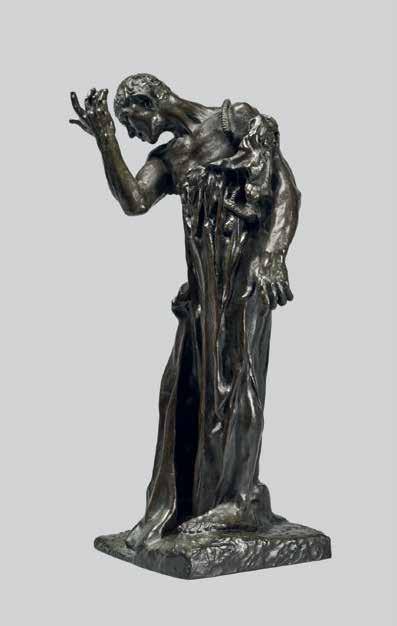
According to Wikipedia, “In 1346, England’s Edward III, after a victory in the Battle of Crécy, laid siege to Calais, while Philip VI of France ordered the city to hold out at all costs. Philip failed to lift the siege, and starvation eventually forced the city to parley for surrender”.
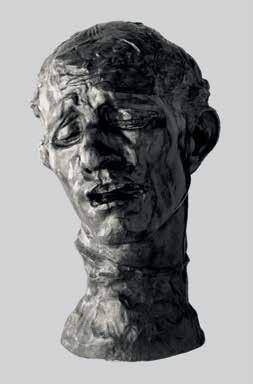
“The contemporary chronicler Jean Froissart (ca. 1337 – ca. 1405) tells a story of what happened next: Edward offered to spare the people of the city if six of its leaders would surrender themselves to him, presumably to be executed. Edward de manded that they walk out wearing nooses around their necks, and carrying the keys to the city and castle. One of the wealthiest of the town leaders, Eustache de Saint Pierre, volunteered first, and five other burghers joined him. Saint Pierre led this envoy of volunteers to the city gates. It was this moment, and this poignant mix of defeat, heroic self-sacrifice, and willingness to face imminent death that Rodin captured in his sculpture, scaled somewhat larger than life.” 16 Rodin made “two models and one study of Pierre de Wissant before the final sculpture. The first model shows the young man pointing to himself with the right hand, as if questioning his final destination. In the nude study he is no longer pointing to himself, but using his arm in a defensive manner.”17 I also drew on tales I had heard from my parents, who were teenagers in the 1940s in Greece, as well as my own reading about the period. I wanted to capture not the official headlines of the generals and the battles but rather the experience of the everyday Greek civilian: The privation, the famine, and the horror of that decade, played out in personal history.
- 1. Wikipedia contributors. (n.d.). Axis occupation of Greece. In Wikipedia, The Free Encyclopedia. Retrieved November 25, 2025, from https://en.wikipedia.org/w/index. php?title=Axis_occupation_of_Greece&oldid=1322049265 (Wikipedia)
- 2. Contested Greek–German Pasts. (n.d.). About the project. In Contested Greek–Ger-
- 3. Wikipedia contributors. (n.d.). Great Famine (Greece). In Wikipedia, The Free Ency - clopedia. Retrieved November 25, 2025, from https://en.wikipedia.org/w/index.php?title=Great_Famine_(Greece)&oldid=1322049370 (Wikipedia)
- 4. Skines Real Estate. (n.d.). Skines. Your Home on Crete. Retrieved November 25,
- 5. Wikipedia contributors. (n.d.). Distomo massacre. In Wikipedia, The Free Encyclo - pedia. Retrieved November 25, 2025, from https://en.wikipedia.org/w/index.php?ti - tle=Distomo_massacre&oldid=1317984205 (Wikipedia)
- 6. My Jewish Learning. (n.d.). The Holocaust in Greece (reprinted from the United
- 7. Yad Vashem. (n.d.). Damaskinos Theophilos (Righteous Among the Nations pro -
- 8. Wikipedia contributors. (n.d.). Greek resistance. In Wikipedia, The Free Encyclo - pedia. Retrieved November 25, 2025, from https://en.wikipedia.org/w/index.php?ti - tle=Greek_resistance&oldid=1322049278 (Wikipedia)
- 9. See note 4.
- 10. See note 1.
- 11. See note 8.
- 12. Wikipedia contributors. (n.d.). Dekemvriana. In Wikipedia, The Free Encyclopedia. Retrieved November 25, 2025, from https://en.wikipedia.org/w/index.php?title=De - kemvriana&oldid=1317446252 (Wikipedia)
- 13. Wikipedia contributors. (n.d.). White Terror (Greece). In Wikipedia, The Free Ency - clopedia. Retrieved November 25, 2025, from https://en.wikipedia.org/w/index.php?title=White_Terror_(Greece)&oldid=1323490623 (Wikipedia)
- 14. Wikipedia contributors. (n.d.). Greek Civil War. In Wikipedia, The Free Encyclo - pedia. Retrieved November 25, 2025, from https://en.wikipedia.org/w/index.php?ti - tle=Greek_Civil_War&oldid=1323759543 (Wikipedia)
- 15. Wikipedia contributors. (n.d.). Makronisos. In Wikipedia, The Free Encyclopedia. Retrieved November 25, 2025, from https://en.wikipedia.org/w/index.php?title=Mak - ronisos&oldid=1320158089 (Wikipedia)
- 16. Wikipedia contributors. (2022, April 12). The Burghers of Calais. In Wikipedia, The Free Encyclopedia. Retrieved 18:50, July 24, 2022, from https://en.wikipedia.org/w/in - dex.php?title=The_Burghers_of_Calais&oldid=1082274422
- 17. Wikipedia contributors. (2021, September 26). Pierre de Wiessant. In Wikipedia, The Free Encyclopedia. Retrieved 18:49, July 24, 2022, from https://en.wikipedia.org/w/ index.php?title=Pierre_de_Wiessant&oldid=1046670685